

Six new sites join UNESCO’s List of World Heritage in Danger
UNESCO’s World Heritage Committee, meeting in Busan (Republic of Korea), decided to inscribe three sites on the World Heritage List following an emergency procedure: the Boma-Badingilo Migratory Landscape (South Sudan), Mount Amel Castles (Lebanon), and Sebastia (State of Palestine). The emergency procedure reflects the current situation, which is marked by multiple crises, including armed conflicts and climate change. These crises are exposing heritage to serious threats. The three sites have also been added to the List of World Heritage in Danger.
The Committee has also decided to add three previously recognised sites to the List of World Heritage in Danger. These sites are now facing serious threats to the values for which they were originally inscribed on the World Heritage List. These are: the Ancient City of Tauric Chersonese and its Chora (Ukraine), the Historic Inner City of Paramaribo (Suriname), and Tyre (Lebanon).
The three sites nominated for emergency inscription are:
Boma-Badingilo Migratory Landscape (South Sudan)
This vast area of East African savanna is home to the world’s largest known terrestrial mammal migration. Its exceptional biodiversity makes it an ecosystem of outstanding global importance. The site also reflects the region’s rich cultural and linguistic diversity, with several ethnic groups having managed and protected this landscape through herding, farming, and fishing for centuries and even millennia.
The Committee identified several serious threats, particularly infrastructure development, commercial poaching, and wildlife trafficking and trade, which directly affect the large populations of migratory mammals. Ongoing insecurity, combined with limited institutional and financial capacity, also makes effective conservation of the site more difficult.
Mount Amel Castles (Lebanon)
The five castles that form this site demonstrate the development of defensive systems in the region from the time of the Crusades and Islamic dynasties until the end of the 19th century.
The site had already received enhanced protection in November 2024 from UNESCO’s Committee for the Protection of Cultural Property in the Event of Armed Conflict. It is currently suffering significant damage, and according to the Committee, the ongoing conflict directly threatens its conservation and requires urgent action.
Sebastia (State of Palestine)
This site preserves archaeological evidence of successive civilisations that occupied the area from at least the 9th century BCE, when Samaria-Sebaste was the capital of the northern Kingdom of Israel, through the Hellenistic, Roman, Byzantine, and Islamic periods. It also contains later architectural remains from the Crusader period, as well as from the Ayyubid/Mamluk and Ottoman periods, when it was one of the designated “Throne Villages”.
The main threat to the site is the planned expropriation and establishment of the “Samaria” (Shomron) national park, which could divide the property. In addition to the effects of the conflict in the Middle East, the site is also under pressure from development, land-use planning, governance issues, and the deterioration of archaeological remains.
Three World Heritage sites added to the List of World Heritage in Danger
Ancient City of Tauric Chersonese and its Chora (Ukraine)
The Committee expressed its deepest concern that, because the Autonomous Republic of Crimea (Ukraine) is temporarily occupied by the Russian Federation, the State Party is unable to ensure the protection, conservation, or management of the site.
In this context, it welcomed the partnership between UNESCO and UNITAR/UNOSAT, which has allowed regular monitoring of the site’s condition through satellite images since 2014. These observations showed significant deterioration in the site’s authenticity and integrity due to new construction and large-scale archaeological excavations.
Because the State Party is unable to fulfill its conservation responsibilities and because damage has been observed to the site’s Outstanding Universal Value, the Committee decided to add it to the List of World Heritage in Danger. It also called for stronger international cooperation to prevent the illegal trafficking of cultural property originating from the Autonomous Republic of Crimea (Ukraine).
Historic Inner City of Paramaribo (Suriname)
The Committee recognised the progress made in managing and conserving the site, especially through the creation of new management plans, the strengthening of the institutional framework, and efforts to reduce fire risks.
However, it noted that several construction projects had been carried out without assessing their impact on the heritage site or taking its recommendations into account. The Committee considered that the new National Assembly hall and the Yogh parking garage negatively affect the historic urban landscape and have caused a significant loss of the site’s authenticity and integrity. It concluded that these structures represent a confirmed threat to the site’s Outstanding Universal Value.
Tyre (Lebanon)
The Committee expressed deep concern about the ongoing hostilities in Lebanon, which continue to threaten the property. It determined that the conditions required to ensure the conservation and protection of the site’s Outstanding Universal Value are no longer in place.
The Committee recognised Lebanon’s efforts to strengthen the protection mechanisms for the property and recalled that the archaeological sites had been included on the International List of Cultural Property under Enhanced Protection within the framework of the 1999 Second Protocol to the 1954 Hague Convention.
It also noted the request submitted by the State Party to add the property to the List of World Heritage in Danger and concluded that the ongoing hostilities in Lebanon represent a direct threat, exposing the site to both existing and potential risks. The Committee called on all parties involved in the conflict to avoid any actions that could cause further damage to the property and to respect their obligations under international law.
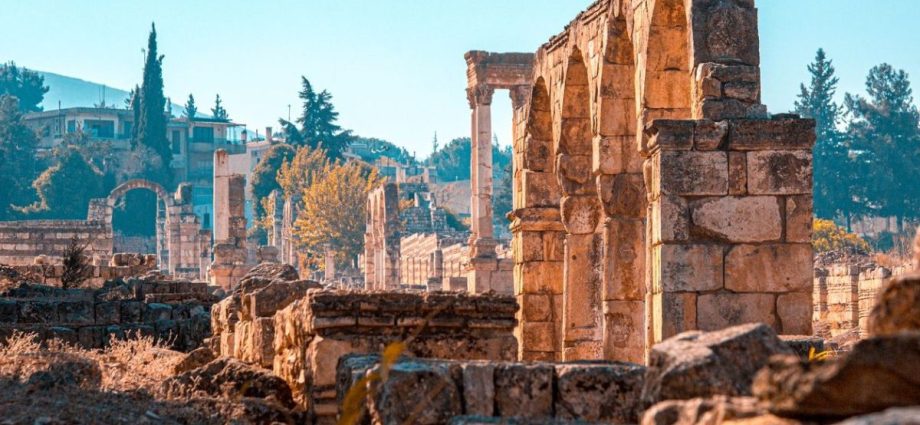
Thank you for sharing this article! For comments, please scroll down below the related articles! | SUBSCRIBE TO OUR FREE NEWSLETTER HERE ✉️ | Source: UNESCO | Cover image: Ancient ruins in Lebanon, Pexels

Dear reader,
join the Club HERE to access all exclusive supporter-only content! You can also make a one-time donation via PayPal (just click the small button!). [paypal-donation]
If you would like to support CenWeb and the reserve in another way, please email us at centauri16@gmail.com. We greatly appreciate your support!
Explore more on CenWeb