

British Library to open major exhibition on Agatha Christie
On 30 October, the British Library will open a major exhibition, Agatha Christie: A World of Mystery, exploring the life and work of the bestselling novelist of all time. Marking 50 years since her death, the exhibition will examine not only the origins of iconic fictional creations like Hercule Poirot and Miss Marple but will also go behind the characters and stories to explore Christie’s world and legacy.
The exhibition will take visitors on a journey through Christie’s upbringing, her interests and travels and how she adapted her novels for the stage, through five immersive sections filled with items from her personal life, including her typewriter, professional and personal correspondence with other writers, family photographs and notebooks and typescripts for novels. There will also be clues and ‘Easter eggs’ dotted throughout the exhibition for Christie fans to sleuth out. Christie’s impact on the wider crime fiction genre will be explored through interviews within the exhibition with leading writers, broadcasters and notable fans.
The country house
On entering the exhibition visitors will gain an insight into Christie’s childhood and adolescence through exploring the quintessential setting for many of her novels, the English country house. Visitors will see early examples of her writing and discover how her upbringing inspired the settings for her works, from her first published novel The Mysterious Affair at Styles (1920) with the iconic ‘drawing room reveal’, and her bestselling And Then There Were None (1939). On display will be photographs of Christie as a child, spending time with her family at their home, Ashfield and roller skating with friends. This section will also explore her beginnings as a young writer, from the typescript for her first short story, House of Beauty, to a notebook from Sir Arthur Conan Doyle illustrating Sherlock’s method for solving mysteries and feedback on her work from acclaimed writer Dorothy L. Sayers.
The dispensary
During the First World War Christie volunteered as a nurse and pharmacy dispenser, honing a knowledge of drugs and toxins which would later prove invaluable to a crime writer. Visitors will explore a dispensary filled with the poisons that crop up in Christie’s work, displayed with the study notes for her pharmaceutical exams taken in 1917 and her World War One service record. The year 1914 also marked when Christie married her first husband, Archie, and there will be letters from him, alongside her notebooks containing ideas for stories and handwritten research notes on poisons including those for her novel The Pale Horse which has been credited for saving lives in the real world.
The train
On leaving the dispensary, visitors will board an Orient Express-inspired train carriage that will evoke the glamour and intrigue of 1920s travel while also exploring Christie’s use of the ‘closed circle mystery’, perfect for stories set in enclosed compartments. Christie was a keen rail enthusiast and this section will explore how her experiences journeying abroad and sharp observations of fellow travellers inspired her writing and helped form the characters and settings for some of her most famous novels, including Murder on the Orient Express. The inter-war years were busy for Christie as she published over 30 novels, including the career-making The Murder of Roger Ackroyd, renegotiated a new publishing contract and spent 10 months travelling across the world with her first husband, Archie Christie. On display will be photographs capturing Christie surfing in Hawaii in 1922 alongside a replica of the surfboard she used, Christie’s hand-written notes for her Isle of Man treasure hunt and a letter written by Christie relaying her journey on the Orient Express in 1931.
The dig
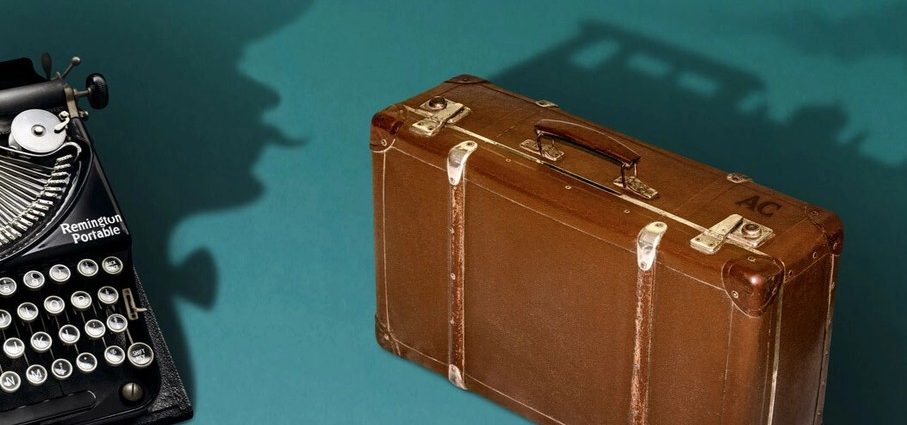
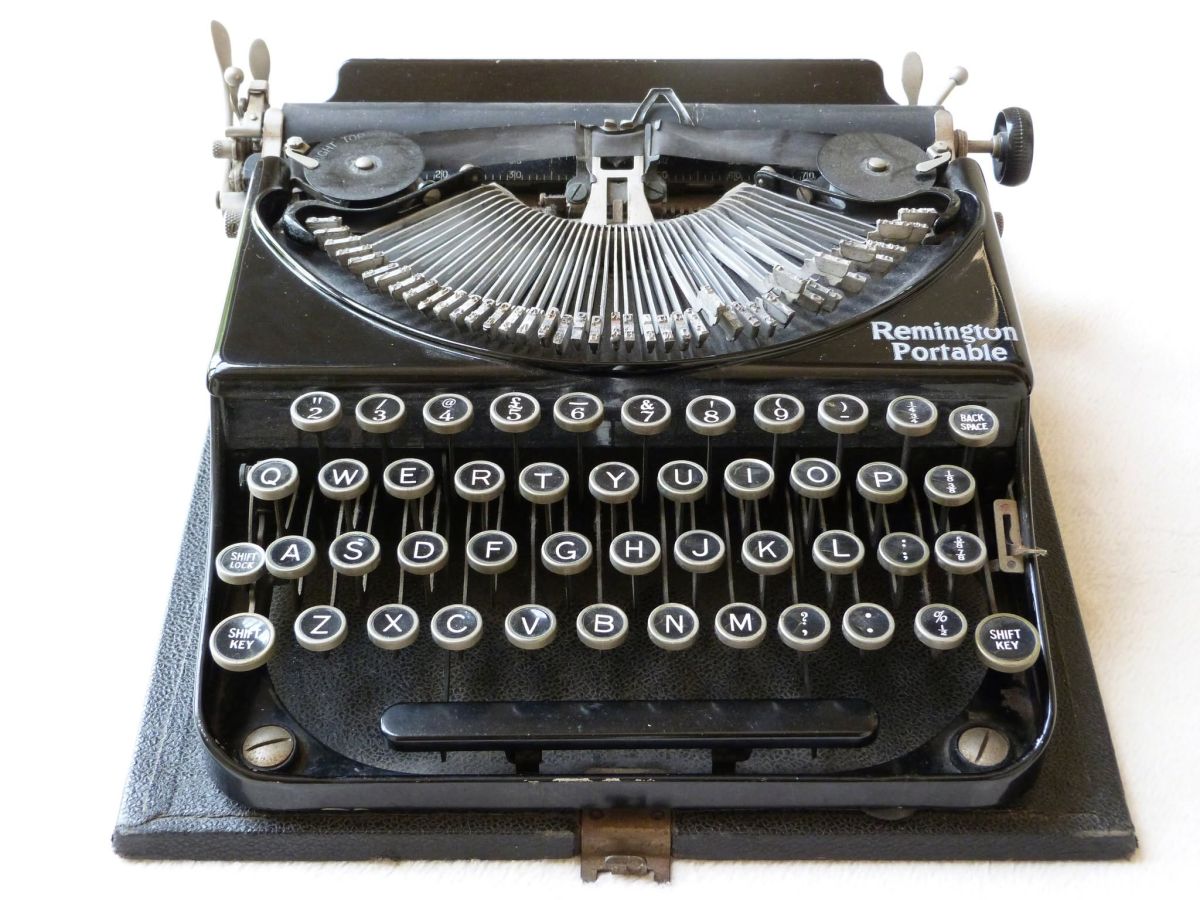
After disembarking from the train visitors will find themselves at the site of an archaeological dig in the 1930s, a time that marked Christie’s second marriage to archaeologist Max Mallowan and her most prolific writing period. While Christie and her novels are associated with the English countryside, her experiences taking photographs and supporting the work of archaeologists on digs in Iraq and Syria from the 1930s informed novels like Murder in Mesopotamia and They Came to Baghdad. On display will be Christie’s plot notes for both novels alongside the 1937 Remington typewriter she used to write And Then There Were None, along with the cine film footage taken by Christie documenting her life on the digs and her Leica camera used for photographing artefacts, including one of the earliest known portrait sculptures, discovered on an excavation led by Max.
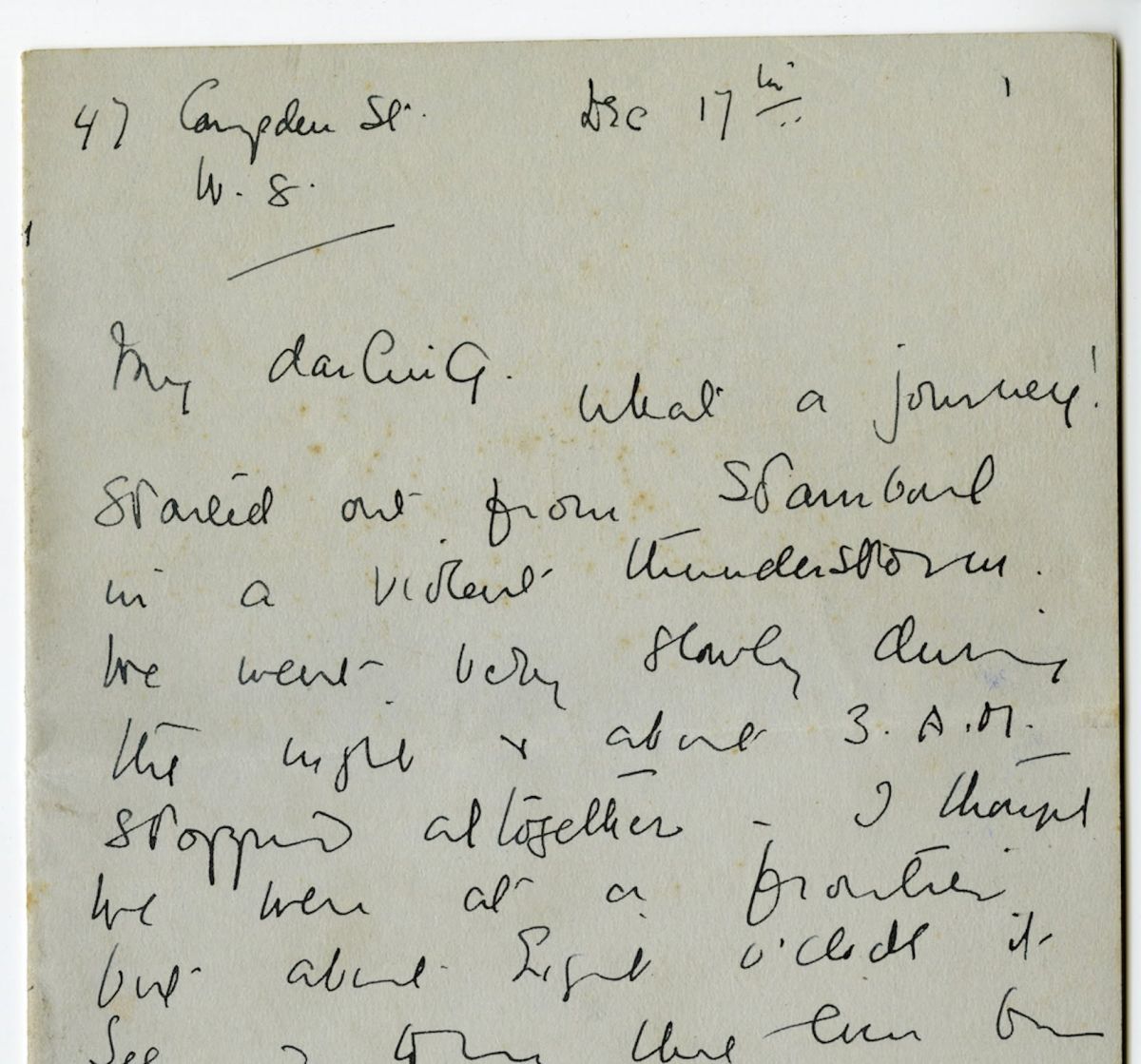
Agatha writes to Max describing her return home from their honeymoon, on the Orient Express. Documenting how the train had been halted by floods and her fellow travellers’ reactions, this
event would inspire her to write Murder on the Orient Express a few years later.
BL/Facebook, © The Christie Archive Trust
The theatre
Visitors will then travel to the glittering West End of the 1950s for the final section, that will explore Christie’s work adapting her novels for stage productions that delighted post-war audiences looking for escapism and intrigue, making her the most successful female playwright of all time. Visitors will discover how she adapted her style and plots for the stage, from her notes for Witness for the Prosecution to rare footage of Christie at The Mousetrap celebrations, the typescript for Curtain: Poirot’s Last Case and the Dictaphone she used in later life to transcribe her first drafts for stories, such as Endless Night (1967). Screen adaptations also brought Christie’s iconic detectives to wider audiences and this section features posters and costumes from film and TV adaptions over the recent decades, including Ariadne Oliver (portrayed by Zoë Wanamaker)’s coat from Dead Man’s Folly (2013) offering visitors the chance to reflect on her impact across the crime genre from literature and theatre to film and TV.
The exhibition has been made possible with support from Great Western Railway and will be open until 20 June 2027. „Agatha Christie and Great Western Railway share a story that stretches back over a century,” said Amanda Burns, Sales and Marketing Director at Great Western Railway (GWR). „Her love of train travel and the journeys she took between London and the South West helped inspire some of the most celebrated crime fiction ever written. This partnership is an opportunity to connect people with the places Christie loved: Torquay, Dartmouth and the Devon coastline, and inspire travel between the South West and London, just as she did.”
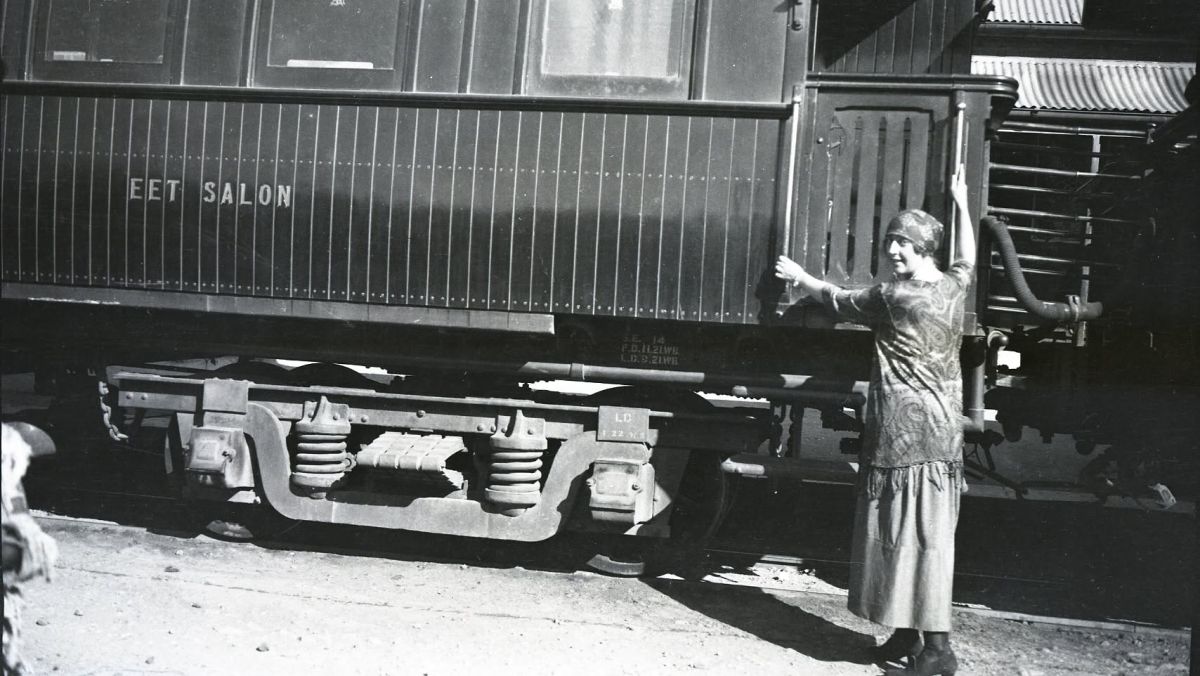
In 1922 Agatha Christie set sail on a 10-month voyage around the world. Her husband Archie had been invited to join a trade mission to promote the British Empire Exhibition and Agatha was determined to go with him
BL/Facebook, © The Christie Archive Trust
Alongside the exhibition, the Library will present the first comprehensive volume on the life, works and influence of Agatha Christie to be published in the last 50 years.
Thank you for sharing this article! For comments, please scroll down below the related articles! | SUBSCRIBE TO OUR FREE NEWSLETTER HERE ✉️ | Source: bl.uk | Cover image: British Library Board

Dear reader,
join the Club HERE to access all exclusive supporter-only content! You can also make a one-time donation via PayPal (just click the small button!). [paypal-donation]
If you would like to support CenWeb and the reserve in another way, please email us at centauri16@gmail.com. We greatly appreciate your support!
Explore more on CenWeb